You have probably tried ads before. Maybe a boosted Facebook post or a broad Google campaign promising “auto repair near you.” The clicks came in. The phone stayed quiet. That gap between clicks and booked bays is exactly where auto shop marketing vs generic ads gets decided, and it almost never favors the generic side.
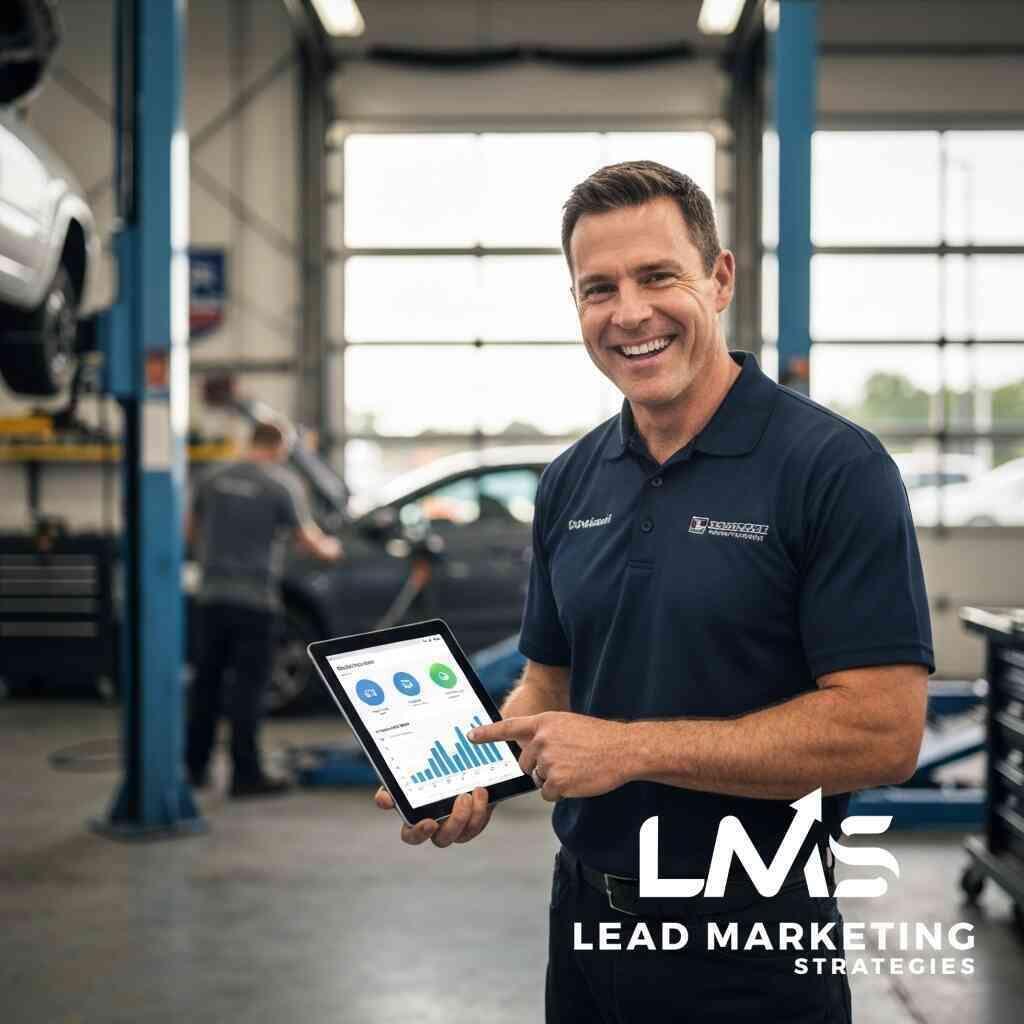
Here is the short answer: auto shop marketing wins because it targets drivers with a specific problem at the exact moment they need it fixed. Generic ads sell a discount to a whole city. Shop-specific marketing sells a solution to someone whose brakes are grinding. One builds trust and high-ticket repair orders. The other trains people to shop you on price.
We work with auto shops every day, and the pattern holds. Let’s break down why it happens and what to do about it.
Why do generic ads underperform for auto repair shops?
Auto repair is a high-trust, symptom-driven necessity. It is not an impulse purchase. Nobody wakes up wanting brake work. They wake up because something is wrong with their car.
Generic ads ignore that reality. They blast a 20% off coupon to a 20-mile radius and hope someone bites. In our experience, that approach produces three problems at once:
- Low average repair orders. Coupon shoppers come for the deal and leave for the next one. Your ARO drops while your ad spend climbs.
- Wrong-intent traffic. A homeowner clicking your ad out of curiosity costs the same as a driver with a failing transmission. Only one of them books a bay.
- Commodity positioning. When your only differentiator is price, you compete with every chain and quick-lube in town.
Shop-specific marketing flips the order. You build visibility around the services you actually want to sell, then capture drivers when their problem matches. That is the core of the marketing strategies that actually move the needle for shops, and it starts with understanding intent.
What is a “panic search,” and why does it matter?
A panic search is what happens when a dashboard light comes on, a noise starts, or a car won’t start. The driver grabs a phone and searches something specific: “grinding noise when braking at low speeds” or “check engine light flashing near me.”
That driver is not comparing coupons. They need help now. They are ready to book, and they will pay for competence and speed.
Industry-specific marketing is built to be the answer to that search. Generic ads are built to interrupt people who weren’t looking. Big difference in conversion rate, and an even bigger difference in the kind of customer you attract.
How symptom-based SEO captures high-intent drivers
Most shop websites list services: brakes, tune-ups, diagnostics. That is fine for people who already know what they need. It does nothing for the driver describing a symptom.
Map your service pages to natural language queries. A page about brake noise that explains the difference between worn pads and warped rotors will outrank a generic “brake service” page for the searches that actually convert. It also gives Google’s AI Overviews and voice search something specific to quote.
This is the same principle behind solid automotive SEO for repair shops: answer the question the driver is actually typing, not the category name in your service menu.
Why am I getting clicks on my Facebook ads but no one is booking appointments?
Because clicks are cheap and intent is expensive. A broad Facebook campaign reaches people who like cars, live nearby, or fit a demographic. It does not reach people with a broken car.
Three fixes usually solve this:
- Narrow the audience to real signals. Target by zip code, vehicle ownership, and life events that correlate with repair needs, not just age and interests.
- Match the offer to the intent stage. A driver with a check engine light does not want a coupon. They want to know what the light means and who can look at it today.
- Fix the handoff. If your ad sends people to a generic homepage with no booking button, you lose them. Send them to a page that answers the symptom and offers a clear next step.
Social ads can absolutely work for shops. They just need to be built for repair, not for retail. Our team builds Facebook and Instagram ad campaigns designed for auto shops around exactly this logic.
Is specialized automotive SEO better than hiring a general local marketing agency?
Usually, yes, and the reason is workflow. A general agency knows local SEO. They do not know that a declined DVI job is a warm lead sitting in your shop management software, or that your Google Business Profile should list real-time service menus.
Specialists build around the operational reality of a shop:
- Google Business Profile as your real homepage. Update services, post 10 or more geo-tagged photos monthly, and turn messaging on. For local searches, your GBP often shows up before your website does.
- Local Services Ads tuned by zip code and job type. Bid on brakes, diagnostics, and transmissions in the neighborhoods you want, not a blanket “auto repair” category.
- DVI remarketing. Automate follow-ups for declined work with text reminders and photos at 2, 14, and 45 days. That is revenue you already earned once.
- Fleet referral engines. Build B2B relationships with nearby plumbers, landscapers, and delivery companies. Fleet health audits create recurring revenue that consumer ads never touch.
None of that shows up in a general agency playbook. It shows up in ours because it is all we do.
How much should an independent auto repair shop spend on marketing vs. paid ads?
There is no universal number, and anyone who quotes one without looking at your market is guessing. What we can tell you is how to split the budget.
Think in two buckets. The first is foundation: website, local SEO, Google Business Profile, reviews, and content that answers symptom searches. This is what makes every paid dollar work harder. The second is acceleration: Google Ads, LSAs, and social campaigns that put you in front of drivers right now.
In our experience, shops that skip the foundation and pour everything into ads end up paying more per lead and converting fewer of them. Shops that build the foundation first often find they need less paid spend than they expected.
If you want a straight answer for your shop, book a free consultation and we will look at your market, your services, and your numbers together.
What is a good cost-per-lead for brake jobs vs. oil changes?
Brake and diagnostic leads should cost more than oil change leads, and that is fine. The mistake is judging them by the same standard.
Oil changes are low-ticket and high-volume. They are a retention tool, not a profit center. Brake jobs, diagnostics, and transmission work carry real margin, so a higher cost per lead still pencils out. Judge every campaign by repair order value, not lead volume.
This is why we track the ROI metrics that actually matter for shop owners instead of vanity numbers like impressions and clicks. If a campaign brings in ten leads and one $1,400 brake-and-rotor job, that campaign did its job. If it brings in fifty coupon oil changes, it didn’t.
How do I stop my marketing from attracting only low-ticket coupon shoppers?
Change what you advertise. Coupons attract coupon shoppers. Education attracts drivers who trust you.
Lead with diagnostics, brake safety, and maintenance guidance instead of discounts. Publish content that explains what a noise means and what it costs to fix. Position your shop as the one that tells people the truth about their car.
Then let your reputation do the heavy lifting. Reviews and word of mouth are the strongest trust signals in this industry, and reputation management for auto shops keeps that signal strong across Google and beyond. Drivers who find you through trust rarely ask for a discount. They ask when they can drop the car off.
Why does speed-to-lead matter more than the ad itself?
Because marketing ends at the phone call or the booking screen. If a lead comes in and nobody answers, the campaign failed no matter how good the targeting was.
We often see shops lose high-intent leads to slow follow-up. The fix is operational: answer the phone, respond to texts fast, and make online booking obvious on every page. Our lead generation systems for auto shops are built to close that gap, not just fill the top of the funnel.
Is retention cheaper than acquisition for auto shops?
Yes, by a wide margin. Keeping an existing bay full costs far less than buying a new customer through generic top-of-funnel ads.
Your shop management software is full of warm leads: declined jobs, overdue maintenance, customers who haven’t been back in a year. Automated reminders, service interval emails, and DVI follow-ups turn that list into booked work. It is the least expensive marketing you will ever run, and most shops leave it sitting untouched.
Frequently asked questions
Can I run Google Ads myself as a shop owner?
You can, and some owners do it well. The risk is bidding on broad terms like “auto repair” and paying for clicks from people who will never book. If you run your own campaigns, start narrow: specific services, specific zip codes, and a landing page for each.
How long does shop-specific SEO take to show results?
Local visibility often improves within a few months, especially Google Business Profile work. Competitive service terms take longer. Paid ads can fill the gap while organic rankings build.
Do I need a mobile app for my auto shop?
Not required, but it helps with retention. An app keeps your shop on a customer’s phone for booking, reminders, and service history. It is one more reason they come back to you instead of searching again.
What should my marketing budget prioritize first?
Foundation first: website, Google Business Profile, reviews, and symptom-based content. Then add paid campaigns once you can convert the leads you already get.
Get help from a team that only markets auto shops
Generic ads treat your shop like any other local business. It isn’t. Your customers arrive with a problem, a deadline, and a decision to make about who they trust with their car. Marketing built for that moment wins. Marketing built for everyone else just spends your money.
If you want a partner who lives in this world, we are ready. Call our team at (833) 532-3100 and tell us what your shop needs. You can also book a free consultation and we will map out a plan for your market. And if you want to keep our team in your pocket, download our mobile app for iOS or Android.
The Auto Shop Marketing Strategies Team
Our team of marketing experts specializes in helping auto shops grow their businesses through strategic digital marketing, SEO, and customer acquisition.
View all articles