Decoding the Profit Equation: What Auto Service PPC ROI Really Means in 2026
Every auto shop owner wants to know where their advertising dollars go. The simple answer is that pay-per-click campaigns generate measurable returns, but the real story runs much deeper. Understanding the true return on investment requires looking beyond surface-level metrics like clicks or impressions. Modern automotive advertising demands a sophisticated approach that connects every ad dollar to actual revenue. The auto service PPC ROI calculation has evolved significantly, and shops that fail to adapt lose serious competitive ground. Lead Marketing Strategies has spent years perfecting these calculations for shops across the country. The difference between average results and exceptional growth lies in how thoroughly you analyze the profit equation. Every click represents a potential customer, but only strategic allocation of spend ensures profitability. The current landscape rewards shops that embrace data-driven decision making with precision and confidence.
Beyond the Click: Redefining Return on Ad Spend for Auto Repair Shops
Click-through rates tell only a fraction of the story for any auto repair business. A high click count means nothing if those visitors never schedule a service appointment. Smart shop owners now focus on return on ad spend as their primary performance indicator. This metric connects every dollar invested directly to actual revenue generated from campaigns. For example, a campaign that produces ten appointments worth five thousand dollars in total service value has a much clearer ROI. Focusing purely on vanity metrics like impressions leads to wasted budgets and missed opportunities. The automotive advertising return on investment near Commack NY requires understanding local search behavior patterns. Customers searching for brake repairs or oil changes behave very differently from general browsers. Shops must track what happens after the click to truly measure campaign effectiveness. The best approach involves connecting ad platforms directly to booking systems and CRM tools. This integration reveals which keywords drive actual paying customers rather than casual browsers. Modern auto shop marketing services prioritize this kind of deep analytical approach for every client. The result is campaigns that produce predictable, scalable results month after month.
The Hidden Revenue Levers: How PPC Drives Lifetime Value for Car Maintenance SEO
Many shop owners underestimate how pay-per-click advertising influences long-term customer relationships. The first visit often comes from a targeted ad, but loyalty develops through consistent service experiences. Calculating lifetime value requires understanding how many return visits a single acquisition generates. A customer who spends three hundred dollars on an initial repair might generate thousands over several years. This hidden revenue stream dramatically changes the pay per click profitability for auto repair in New York calculations. Shops that ignore lifetime value significantly undervalue their advertising efforts. The relationship between PPC and car maintenance SEO creates a powerful synergy that amplifies results. Customers who find a shop through paid ads often return through organic searches later. This dual-path customer journey means initial acquisition costs decrease over time. Smart shop owners optimize their campaigns specifically for long-term customer retention. They recognize that the first appointment is just the beginning of a profitable relationship. This perspective transforms how shops approach their advertising budgets and strategy decisions.
Attribution Modeling for Automotive Digital Ad Performance Benchmarks
Attribution modeling determines which marketing channels deserve credit for each conversion. Single-touch attribution models often misrepresent how customers actually find auto shops. Most car owners interact with multiple touchpoints before booking a service appointment. They might see a social media post, click a search ad, then visit the website directly. Proper attribution reveals which channels truly drive decisions at each stage. The auto shop ad spend efficiency calculations must account for these complex customer journeys. Shops that use last-click attribution significantly undervalue awareness-building campaigns. Advanced models like linear or time-decay attribution provide much more accurate pictures. These models distribute credit across all touchpoints based on their actual influence. Understanding these nuances helps shops allocate budgets more effectively across all channels. The difference between profitable and unprofitable campaigns often comes down to attribution accuracy. Many shops waste money on channels that appear effective under flawed models. Implementing proper attribution requires sophisticated tracking tools and analytical expertise. The payoff comes through dramatically improved campaign performance and reduced wasted spend. Automotive digital ad performance benchmarks continue rising as attribution methods improve across the industry.
The Metrics That Matter: Calculating Pay-Per-Click Profitability for Auto Shops
Running profitable PPC campaigns requires tracking the right metrics with consistency and precision. Many shop owners get lost in vanity metrics that look impressive but reveal little about actual performance. The key is focusing on metrics that directly connect advertising spend to revenue generation. Every campaign should have clear performance indicators that align with business goals. These metrics vary depending on whether the shop focuses on repairs, maintenance, or specialty services. Understanding which numbers matter most prevents budget waste and accelerates growth. The most successful shops track conversion paths from initial click through final payment. This complete picture reveals which campaigns truly drive profitability rather than just traffic. The following subsections break down the essential metrics every shop must monitor for success.
Cost Per Acquisition vs Customer Lifetime Value in Mechanic PPC Conversion Tracking
Cost per acquisition represents the immediate expense of converting a click into a customer. This metric calculates how much you spend on ads before a customer books their first appointment. Many shops focus exclusively on this number without considering long-term implications. The problem is that a high acquisition cost might still be profitable if customers return frequently. Customer lifetime value provides the counterbalance that prevents shortsighted budget decisions. A shop spending fifty dollars per acquisition might panic unnecessarily. If each customer returns three times per year for several years, that initial investment looks tiny. The mechanism in mechanic PPC conversion tracking must account for both metrics simultaneously. Shops should establish baselines for both numbers before optimizing campaigns aggressively. The vehicle repair ad revenue attribution in 2026 requires understanding these dual metrics in context. Seasonality affects both acquisition costs and lifetime value in predictable patterns. Winter months might see higher acquisition costs but also higher average repair values. Smart shops adjust their targets based on historical data from their specific market. The automotive lead generation cost analysis on Long Island shows wide variations between different service types. Oil change customers convert cheaply but have lower lifetime values than transmission repair customers. Understanding these differences prevents misallocating budgets across service categories.
Service Appointment PPC Cost Per Booking and Click-to-Call Conversion Rates
The cost per booking metric measures exactly what it costs to fill a service appointment slot. This number varies dramatically based on competition, season, and ad quality. Shops in competitive urban areas often pay more per booking than rural shops. The key is understanding your specific market dynamics and setting realistic targets. Click-to-call conversion rates represent another critical metric for auto service businesses. Many customers prefer calling directly rather than filling out online forms. Tracking these calls requires specialized phone tracking software that connects calls to specific ads. The auto repair click to call conversion rate boosting happens through targeted ad copy and extensions. Adding call buttons directly to ads makes it easy for mobile users to connect instantly. Shops should track both booking rates and conversion rates from calls separately. A high call volume means nothing if those calls do not produce actual appointments. Recording and analyzing call quality helps identify training opportunities for staff. The service appointment PPC cost per booking should decrease as campaigns mature and optimize. Testing different ad formats, headlines, and landing pages reveals what drives the best results. Shops that continuously refine their approach see steady improvements in both metrics over time.
Break-Even Analysis for Auto Service Ad Campaigns and Incremental Revenue Attribution
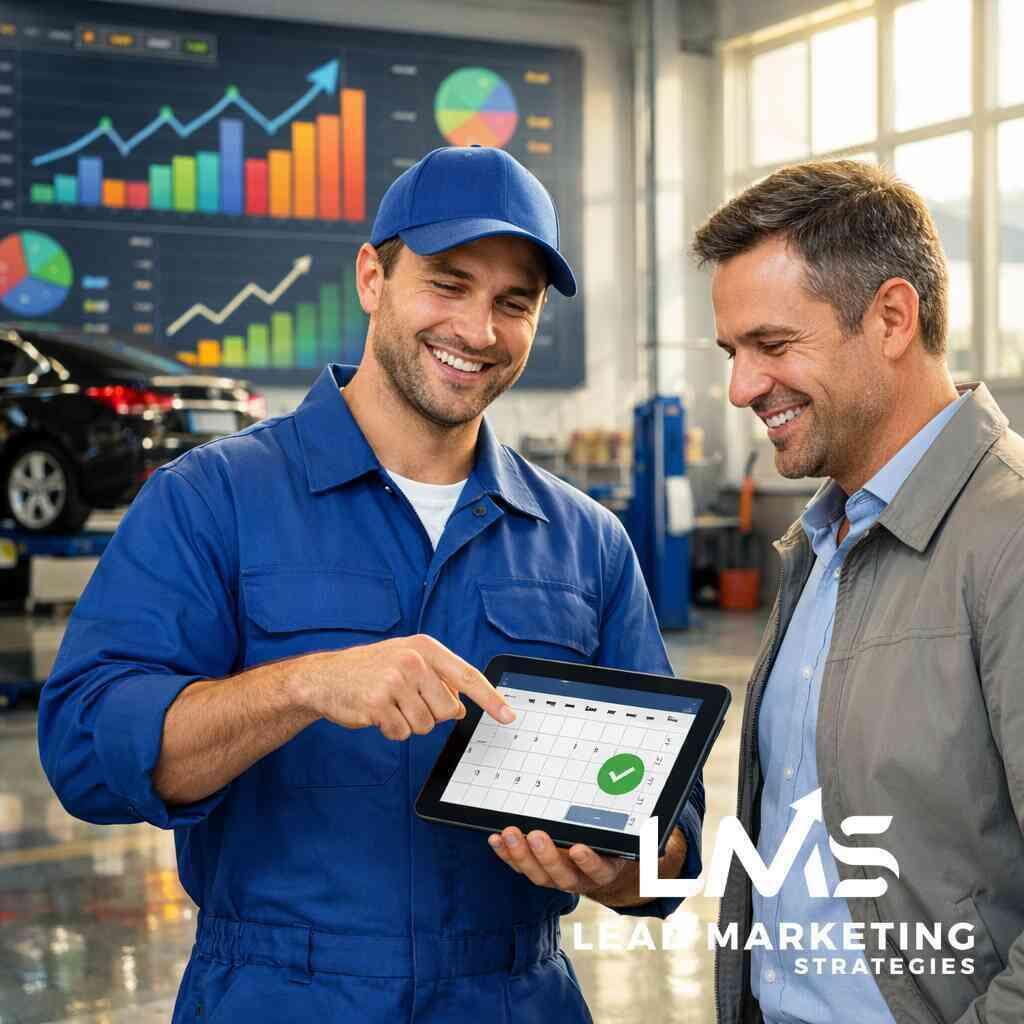
Break-even analysis determines the point where campaign revenue equals campaign costs. This calculation requires knowing average order values, conversion rates, and total ad spend. Shops can calculate how many bookings they need to break even on any campaign. This analysis prevents running campaigns that look busy but actually lose money. The auto service ad campaign break even analysis for auto body shops requires careful data collection. Body shops typically have higher average order values than quick-service shops. Their break-even points look very different from a standard maintenance shop. Incremental revenue attribution measures the additional revenue generated directly from advertising efforts. This metric distinguishes between revenue that would have happened anyway versus ad-driven revenue. Understanding incrementality prevents overvaluing campaigns that capture existing demand. Shops should run controlled experiments to measure true incremental impact. The car rental advertising ROI metrics 2026 show similar patterns across different automotive verticals. Rental companies must understand which campaigns drive new bookings versus brand searches. Break-even analysis provides the foundation for sustainable campaign scaling over time.
Strategic Synergy: Maximizing PPC ROI Through Integrated Automotive Marketing
Isolated PPC campaigns rarely achieve the same results as integrated marketing strategies. The most successful shops combine multiple channels to create a unified customer experience. This integration amplifies the effectiveness of every dollar spent across all platforms. Customers encounter consistent messaging whether they find you through search, social media, or referrals. The synergistic effect produces results greater than the sum of individual channel contributions. Shops that treat PPC as a standalone tactic miss massive opportunities for growth. The following sections explore how integrating different marketing channels maximizes overall return on investment.
Bridging Automotive SEO and PPC for Dominant Local Search Presence
Search engine optimization and pay-per-click advertising work best when they support each other. Organic search results provide long-term, cost-effective traffic that builds over time. Paid search ads capture immediate attention while organic rankings develop organically. The combination creates a dominant presence that competitors struggle to overcome. Shops that rank both organically and through ads capture the majority of search traffic. This dual presence builds trust with customers who see the brand multiple times. The vehicle service ad impression share improvement happens naturally when SEO and PPC align. Keyword data from PPC campaigns informs SEO content strategy and prioritization. High-converting PPC keywords deserve dedicated SEO landing pages for organic capture. Conversely, SEO insights reveal long-tail keyword opportunities for PPC expansion. The automotive SEO and PPC synergy creates compound returns over time. Shops that integrate both channels see lower overall acquisition costs. The automotive PPC bid strategy ROI for digital marketing improves with SEO data integration. Understanding which keywords convert best helps optimize both campaign types effectively.
Leveraging Automotive Social Media Marketing to Amplify PPC Campaigns
Social media platforms provide powerful amplification opportunities for PPC campaigns. Sharing ad content organically extends reach without additional advertising costs. Customer reviews and testimonials shared on social media build trust that supports paid campaigns. The combination creates a comprehensive brand presence that resonates with modern consumers. Shops running automotive social media marketing campaigns see higher engagement on their paid ads. Social proof from followers and fans improves ad relevance scores and reduces costs. Retargeting campaigns on social platforms capture visitors who did not convert initially. This second touchpoint dramatically increases overall conversion rates across the funnel. The car rental social media campaigns and PPC integration follow similar patterns for success. Social media content that performs well organically makes excellent paid ad creative. Testing different content formats across both channels reveals what resonates with audiences. Video content performs exceptionally well on both social media and PPC platforms. Shops that invest in professional video production see superior results across all channels.
From Lead Generation to Retention: How Car Repair Digital Marketing Attribution Modeling Optimizes Spend
The customer journey from lead generation to retention requires sophisticated attribution modeling. Understanding which channels drive initial awareness versus final conversion prevents budget waste. Attribution models reveal the complete customer path across all touchpoints and channels. This insight allows shops to allocate budgets based on actual channel influence. The car leasing campaign incremental revenue attribution requires tracking multiple touchpoints over time. Leasing customers often research for weeks before making a decision. Attribution models must account for this extended consideration period accurately. The auto shop marketing analytics and PPC synergy in 2026 depends on proper attribution implementation. Shops that master attribution see significant improvements in overall campaign efficiency. Reduced wasted spend and improved conversion rates follow naturally from better data. The marketing attribution approach from Lead Marketing Strategies has helped countless shops optimize their spend. Modern attribution requires integrating data from ad platforms, website analytics, and CRM systems. This unified view provides the most accurate picture of campaign performance available. Shops that invest in proper attribution infrastructure gain significant competitive advantages over those that do not.
The landscape of auto service PPC advertising continues evolving rapidly, and shops that adapt thrive. Understanding the true ROI requires looking beyond surface metrics to deeper performance indicators. The combination of proper attribution, integrated marketing, and strategic budget allocation produces sustainable growth. Lead Marketing Strategies provides the expertise and tools necessary to navigate this complex environment successfully. Our team has helped shops across all fifty states transform their advertising performance. The automotive marketing techniques we employ have consistently delivered measurable results for our clients. Contact us today to discover how we can help your shop achieve exceptional PPC returns.
Frequently Asked Questions
Question: What does the auto service PPC ROI calculation look like for 2026, and how can Auto Shop Marketing Strategies help us improve it?
Answer: The auto service PPC ROI calculation in 2026 focuses on more than just clicks-it connects every dollar of ad spend to actual revenue, lifetime value, and incremental profit. Our team at Auto Shop Marketing Strategies uses advanced analytics to track mechanic PPC conversion tracking from initial click through final payment, ensuring you see the full picture. By integrating car repair digital marketing attribution modeling, we reveal which keywords and campaigns drive true profitability. With our expertise, you can optimize pay-per-click profitability auto repair campaigns to lower cost per acquisition and boost returns. We help you avoid vanity metrics and focus on what matters: actual booked appointments and repeat business. Let us handle the data so you can grow your shop with confidence.
Question: How does car maintenance PPC lifetime value influence automotive advertising return on investment for a shop like mine?
Answer: Customer lifetime value dramatically changes the automotive advertising return on investment picture because a single customer who finds you through PPC may return for years. Our auto shop marketing services include tracking car maintenance PPC lifetime value to show how initial acquisition costs pay off over time. For example, a customer who spends $300 on their first brake job could generate thousands in future repairs. We factor this into the auto service PPC ROI calculation to justify higher spend on high-value services. Using automotive customer acquisition cost optimization, we balance short-term costs with long-term gains. This approach, grounded in automotive lead generation cost analysis, ensures your budget works smarter. Trust us to build campaigns that turn first-time visitors into loyal, high-value clients.
Question: Can you explain break-even analysis for auto service ad campaigns and how it ties to PPC for auto body shop profitability?
Answer: Absolutely. Break-even analysis for auto service ad campaigns calculates the point where revenue from ads offsets the cost of the ads, which is critical for understanding PPC for auto body shop profitability. If your average repair ticket is $500 and each booking costs $50 in ads, you need just one booking to break even on 10 clicks. Our car repair digital marketing team uses this data to set smart budgets and bid strategies. We integrate vehicle repair ad revenue attribution to confirm that ad-driven revenue is genuinely incremental-not just capturing existing demand. By optimizing your auto shop SEM cost per acquisition and monitoring service appointment PPC cost per booking, we ensure every campaign is sustainable and scalable. This method, combined with our automotive digital ad performance benchmarks, delivers consistent profits. Let us help you master the numbers.
Question: What strategies do you recommend for auto shop marketing services PPC analytics to boost PPC ROI, especially after reading your article ‘What Is the ROI of Auto Service PPC Advertising in 2026’?
Answer: Based on the insights from ‘What Is the ROI of Auto Service PPC Advertising in 2026’, we recommend focusing on three key strategies. First, implement automotive SEO and PPC synergy by using high-converting PPC keywords to guide your organic content. Second, leverage car repair digital marketing attribution modeling to give proper credit to awareness-building channels, not just last-click conversions. Third, optimize auto repair click-to-call conversion rates with ad extensions and call tracking-many local customers prefer calling directly. Our auto shop marketing services PPC analytics tools connect ad platforms to your CRM, giving you a unified view of performance. We also refine your automotive PPC bid strategy ROI through A/B testing and seasonal adjustments. By following these proven tactics, you will see stronger returns from every ad dollar spent through 2026 and beyond.
Question: How does automotive social media marketing amplify PPC campaigns for auto service local SEO and foot traffic?
Answer: Automotive social media marketing amplifies PPC by building trust and extending reach without extra cost. When customers see your ads and then find positive reviews or engaging posts on social media, their confidence grows, increasing auto repair click-to-call conversion rates. This synergy also boosts auto service local SEO, as social signals and shared content support your local search rankings. For auto service local PPC foot traffic ROI, retargeting website visitors on social platforms brings them back to book. We combine these efforts with car detailing service marketing and auto repair content marketing to create a unified brand presence. Our approach ensures your paid campaigns work harder, driving both online conversions and in-shop visits. Let us show you how to integrate social and PPC for maximum impact in your area.

The Auto Shop Marketing Strategies Team
Our team of marketing experts specializes in helping auto shops grow their businesses through strategic digital marketing, SEO, and customer acquisition.
View all articles