

Auto repair content ranks and converts when it answers a real driver’s problem in plain language, matches local search intent, and nudges the reader toward calling or booking. If your content sounds like a brochure, Google ignores it and drivers do too.
Key Takeaways
- Ranked auto repair content starts with the job the driver needs done, not with shop history or generic marketing language.
- Google Business Profile signals, reviews, and location clues often matter before homepage copy for nearby brake, oil change, and tire searches.
- Service pages win when they use plain-English symptoms, local modifiers, and conversion-focused structure that fits high-intent local service keywords.
- Schema markup, review-driven trust signals, and symptom-based landing pages help turn traffic into calls instead of bounce clicks.
- A steady content system tied to SEO, web design, Google Ads, and retargeting keeps bays full after the first visit, especially for shops on Long Island and beyond.
You spent money on content, maybe even on ads, and the phone still feels too quiet. I hear that from shop owners all the time, and it is frustrating because you already know the work. The hard part is making search engines and regular drivers understand that work fast.
Why your best repair advice still gets ignored online
Your best repair advice gets ignored online because it speaks like a technician, while search results reward pages that sound like a useful answer. A driver searching for brake noise or an oil change wants clarity, speed, and proof. If your page buries the answer, it loses the call even when the advice is correct.
The gap between shop-floor expertise and search engine copy that actually pulls in brake and oil change calls
The biggest gap is simple: you know the diagnosis, but the page has to sell the symptom, the fix, and the reason to choose you. That is the heart of auto repair content marketing. A strong page for brake repair marketing should say what squealing means, what gets checked, how long the visit takes, and what happens if the driver waits.
Here is the part most owners miss: your content should match the exact phrase people type. That means using auto repair SEO tips, car maintenance SEO, and oil change advertising language naturally inside service pages, not hiding it in a blog no one finds. We often see better results when a page says “brake grinding,” “check engine light,” or “transmission slip” before it says anything fancy.
One shop we worked with had a clean homepage and a full list of services, but no pages tied to the problems drivers actually search for. Once we built symptom-based pages for brake noise, oil change reminders, and AC repair, the calls changed. People started landing on a page that felt like it was written for their exact car problem.
Why nearby drivers trust Google Business Profile signals, reviews, and location clues before they trust your homepage
Nearby drivers usually trust the map pack before they trust the homepage. That is why local SEO for auto shops and auto repair Google My Business optimization matter so much. Google Business Profile reviews, service categories, hours, photos, and distance clues tell people you are real, open, and close by.
This is where reputation management for mechanics becomes part of content strategy, not a side task. A page can rank, but if your reviews are thin, your photos are stale, or your address looks incomplete, people move on. Google’s own advertising and marketing guidance also makes it clear that claims, offers, and endorsements need to be honest and clear, which matters when you are writing service copy and ad text.
For a shop in Commack or anywhere on Long Island, local proof matters even more. A driver in Suffolk County wants to know you are close enough for a same-day repair, not just “a good company.” That is why location language, map signals, and consistent business details can do more than a polished homepage alone.
What makes auto repair content rank without sounding like robot bait
Auto repair content ranks when it sounds like a helpful service writer, not a keyword dump. Use plain language, cover the driver’s problem, and place your local terms where they fit naturally. The best pages blend car service web design, service details, and trust signals so people can act without hunting for the phone number. 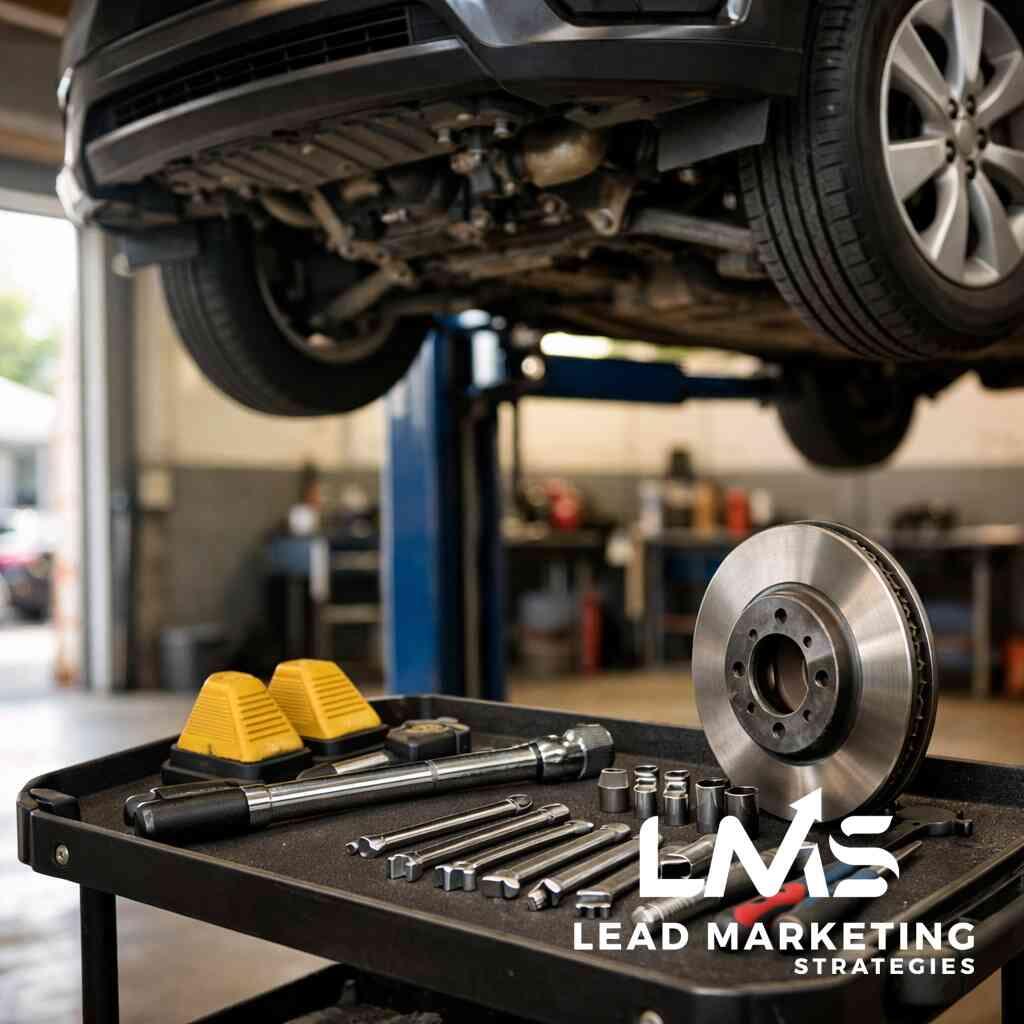
Turning auto repair SEO tips into plain-English service page copy that wins high-intent local service keywords
The job is to turn technical knowledge into simple promises. For transmission shop digital marketing, that might mean explaining slipping gears, delayed shifts, and what a diagnostic visit includes. For tire shop marketing, it might mean talking about tread depth, balancing, rotation, and emergency tire replacement in everyday words.
A useful service page usually includes:
- The problem the driver feels
- The repair you provide
- What happens during the inspection
- How long it usually takes
- A clear call to call, book, or request a quote
That structure helps with high-intent local service keywords because it lines up with what people want right now. It also supports auto service advertising, car shop online advertising, and auto shop customer acquisition because the page does more than inform. It moves people toward action.
Page TypeBest UseConversion StrengthGeneral homepageBrand trust and overviewMediumService pageSpecific repairs and local keywordsHighSymptom-based landing pagePain-point searches and urgent callsVery highBlog postEducation and internal linkingMedium### Building trust-building service content with symptom based repair landing pages, schema markup, and review driven lead generation
Symptom-based pages work because drivers search with pain, not part names. Someone types “car shakes when braking,” not “rotor resurfacing.” That is why trust-building service content should include symptom language, likely causes, and a direct path to schedule. It is one of the most practical auto repair marketing strategies I recommend.
Then add schema markup. Schema markup for auto repair pages helps search engines understand your service, hours, location, ratings, and FAQs. Combine that with review snippets, service area language, and clear CTAs, and you strengthen car service online presence without stuffing keywords.
For authority, I also like to lean on recognized industry sources. The Auto Care Association and the Automotive Service Association are useful reference points for shop owners who want to stay current on service trends and business practices. If your content shows that kind of grounded expertise, it feels real, because it is.
The content machine that keeps bays full after the first click
A content machine keeps bays full when every piece of content has a job: rank, earn trust, or bring people back. That means connecting auto repair content marketing to web design, paid search, email, social, and retargeting. One article should not live alone. It should feed the whole shop’s lead system.
How to map auto repair content marketing to auto shop customer acquisition with car repair digital marketing, web design, and Google Ads for auto repair
I usually tell shop owners that content should do three jobs at once. First, it should support automotive SEO and affordable auto shop SEO. Second, it should improve car repair digital marketing by giving ads and social posts somewhere useful to send traffic. Third, it should increase conversion once the visitor lands.
A simple content map looks like this:
- SEO service pages for brakes, tires, oil changes, and diagnostics
- Blog posts that answer common questions and support car repair FAQ optimization
- Google Ads for auto repair and mechanic PPC ads that send traffic to the right page
- Facebook ads for mechanics and Instagram marketing for car shops for local awareness
- Auto service retargeting to bring back people who visited but did not call
- Auto service email marketing for reminders, inspections, and seasonal care
This is where the broader stack matters. A page with strong automotive website design and car service web design will convert better than a page buried on a clunky site. We see the same thing with auto repair conversion rate optimization: faster pages, clearer buttons, click-to-call on mobile, and fewer distractions usually beat clever copy.
One Commack shop I remember had good traffic but weak calls. The site loaded slowly, the quote form was buried, and the service pages were thin. After we tightened the layout, added call-only options, and built content around increase car count marketing, the phone started ringing more often from the same traffic. That is usually the difference between “we get visitors” and “we get jobs.”
If you want the content to keep working, publish more than just repair pages. Add car service social media posts, short video clips, seasonal maintenance reminders, and review prompts after every good job. That also supports auto shop video marketing, automotive social media marketing, auto mechanic lead generation, and how to get more car repair customers without making the shop sound salesy.
For shops that want help beyond DIY, we do this every day through automotive SEO and auto repair PPC management, plus content and design built for shops that need the phone to ring. If you want a broader content system, our content marketing services and web design work together instead of in separate silos.
If your shop serves drivers in Commack, across Long Island, or anywhere in the country, the playbook is the same: write for the symptom, prove you are local, and make booking easy. Auto Shop Marketing Strategies does that with specialized automotive brand development, local SEO, and content built for repair shops, not generic businesses. If you want a second set of eyes on your site, call +18335323100 or download the Auto Shop Marketing Strategies app and book a consultation.
Frequently Asked Questions
Question: How do you write auto repair content that ranks and converts in a way that actually improves auto shop customer acquisition?
Answer: The best auto repair content ranks and converts when it is built around the driver’s problem, not around generic shop language. That means using auto repair content marketing to address symptoms like brake noise, oil change reminders, check engine lights, or transmission slipping in plain English, then guiding the reader to call, book, or request a quote.
At Auto Shop Marketing Strategies, we focus on educational repair content that sells without sounding pushy. We build service page SEO for repair shops, conversion-focused auto repair copy, and trust-building service content that matches high-intent local service keywords. That approach helps with how to get more car repair customers because the content speaks to people who are already looking for a solution.
We also connect the page to the rest of the funnel through automotive SEO, car repair digital marketing, automotive website design, and auto repair conversion rate optimization. When the page is mobile-friendly, loads quickly, and has clear calls to action, it becomes much easier to increase car count marketing instead of just collecting traffic.
Question: What does local SEO for auto shops need to include for stronger auto repair Google My Business optimization and better calls?
Answer: Local SEO for auto shops should always include strong Google Business Profile signals, consistent business information, service categories, location details, photos, and review management. Nearby drivers usually trust the map listing before they trust the homepage, so auto repair Google My Business optimization can have a bigger impact than many owners expect.
For Auto Shop Marketing Strategies, that means building a full local search foundation that supports automotive brand development and reputation management for mechanics. We make sure your site and listings reinforce each other with location-based auto repair marketing, local service pages, and clear business details that build confidence fast.
This is especially important for Commack NY auto shop marketing and Long Island car repair marketing, where competition can be tight and distance matters. With the right local SEO for auto shops, plus review-driven lead generation and car service online presence improvements, you can create more calls from people who are ready to book now.
Question: How do car service web design and automotive website design affect auto shop marketing ROI?
Answer: Car service web design and automotive website design directly affect auto shop marketing ROI because they determine whether traffic becomes leads. A good site does more than look polished. It makes it easy for visitors to find services, understand what you offer, and contact the shop without friction.
That is why we design sites around conversion-focused auto repair copy, service page SEO for repair shops, and mobile-first auto repair content. When a visitor lands on a brake repair marketing page, tire shop marketing page, or oil change advertising page, they should immediately understand the problem, the fix, and the next step.
Auto Shop Marketing Strategies builds websites as part of a complete auto shop marketing plan. We combine car service web design with automotive SEO, car shop online advertising, auto service advertising, and mechanic PPC ads so your site works as the center of your car repair digital marketing. That is how you improve the return on Google Ads for auto repair, Facebook ads for mechanics, and broader auto mechanic lead generation campaigns.
Question: What kinds of content work best for auto shop blog writing, automotive social media marketing, and auto service retargeting?
Answer: The strongest content usually includes symptom-based repair pages, seasonal car care marketing, service reminder content, and short educational posts that answer common customer questions. These formats work well because they support both search visibility and social engagement.
For auto shop blog writing, we recommend content that targets car maintenance SEO and high-intent local service keywords such as brake repair marketing, transmission shop digital marketing, auto body shop SEO, collision center marketing, and oil change advertising. These topics help search engines understand your authority while also giving drivers clear answers.
For automotive social media marketing, shorter car service social media posts and auto shop video marketing clips tend to perform well. They can be repurposed for Facebook ads for mechanics, Instagram marketing for car shops, and TikTok auto shop marketing when you want to reach more local drivers.
Auto service retargeting then brings back people who visited but did not convert. When combined with auto service email marketing and car repair FAQ optimization, the result is a stronger path from first click to booked appointment.
Question: Why should a shop choose Auto Shop Marketing Strategies for affordable auto shop SEO and auto repair marketing strategies?
Answer: Auto Shop Marketing Strategies is built specifically for repair shops, dealerships, body shops, and service businesses that need real leads, not generic marketing. Our work is centered on affordable auto shop SEO, automotive content marketing, automotive website copywriting, and auto repair marketing strategies that support long-term growth.
We do more than publish content. We connect automotive SEO, Google Ads for auto repair, mechanic PPC ads, auto mechanic lead generation ads, and auto shop video marketing into one system that supports auto shop customer acquisition. That means your content, site, ads, and review strategy all work together instead of operating in separate silos.
We also understand the full range of shop types, including tire shop marketing, auto body shop SEO, collision center marketing, transmission shop digital marketing, and even car rental SEO strategies when needed. Whether you want to improve your car service online presence, strengthen automotive brand development, or build a better auto shop marketing ROI, we can help you create a plan that fits your goals and your market.
If you want the best auto repair marketing company experience with a practical approach, our team is ready to help with your next campaign, your next website, or your next content push. That is how we help shops increase car count marketing and build a stronger pipeline over time.
Every article is written by one of our founders and independently reviewed by the other before it goes live.

Ken Key is Chief Technology Officer and Co-Owner of Auto Shop Marketing Strategies, where he leads auto shop SEO, website development, and lead generation. He builds practical technology that helps repair shops, tire stores, and body shops get found and book more work. Ken runs the company with his wife Dominique and treats every client's shop like family.

Dominique Key is the co-owner and chief marketing officer of Auto Shop Marketing Strategies. She writes about auto shop marketing, local SEO, and lead generation for independent shops. She runs the agency with her husband Ken and treats every client relationship like a long-term partnership.


