
Auto Shop Email Marketing: The Complete 2026 Guide to Campaigns That Fill Your Bays
Most auto shops collect an email address at the counter and never touch it again. That is a missed repair order, month after month. Email is still the highest-ROI channel in your marketing stack, and in 2026 it works best when it is tied to your shop management software and your customers’ actual driving habits.
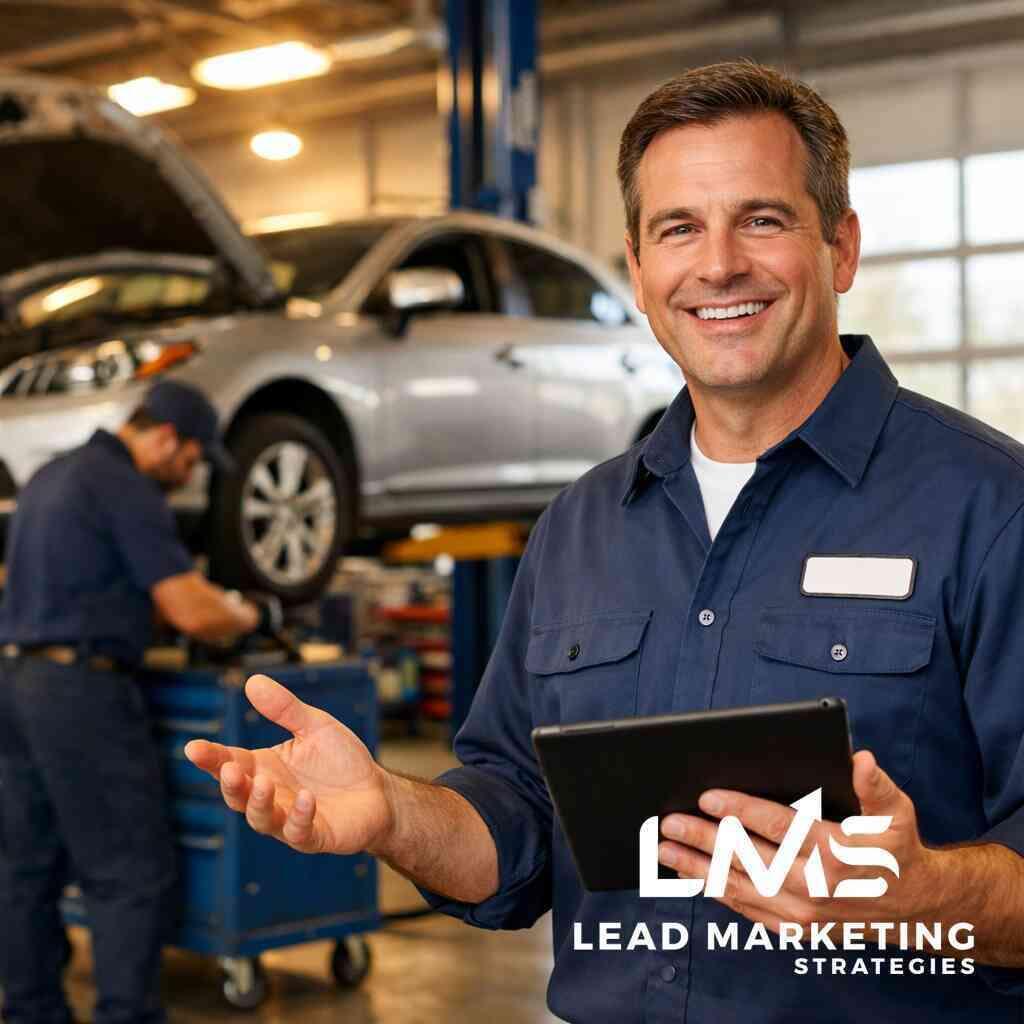
Auto shop email marketing works by sending the right maintenance reminder to the right vehicle owner at the right mileage. The best campaigns sync with your shop management software, segment by vehicle type, follow up on declined services, and automate weather-based offers. Shops that do this see more repeat visits and higher average repair orders than shops that send one generic newsletter a quarter.
We build these campaigns for repair shops every week. Here is exactly how to do it, from your first automation to the metrics that prove it is working.
Why Does Email Still Beat Almost Every Other Channel for Auto Shops?
Because your customer already knows you, trusts you, and gave you permission to reach them. That is a warm audience. Paid ads rent attention. Email owns it.
Email also fits the way car owners actually think. Nobody wakes up wanting an oil change. But when their dashboard light comes on, or a road trip is two weeks out, a well-timed reminder feels like service, not spam. That is the whole game. In our experience, a shop with a clean, automated reminder sequence gets more repeat business than a shop relying on the customer to remember.
One more thing: email is the connective tissue between your other channels. Your social media marketing builds awareness. Email converts awareness into a booked appointment. Skip it and you leave money sitting in your customer list.
How Often Should an Auto Repair Shop Send Emails to Customers?
Once or twice a month for general campaigns, plus automated service reminders tied to mileage or time. That is the sweet spot. More than that and unsubscribe rates climb. Less and your list goes cold.
Here is a simple cadence that works for most independent shops:
- Automated maintenance reminders: triggered by mileage or time since last visit, roughly 30 to 60 days before the service is due
- Declined service follow-ups: 7 to 14 days after the visit
- Seasonal or weather-based campaigns: 2 to 4 per year
- General newsletter or shop news: monthly or every other month
- Win-back campaigns: for customers who have not visited in 9 to 12 months
Notice that most of that is automated. You set it up once and it runs. Your service advisor does not have to remember to send anything.
What Should Your First Email Automations Be?
Start with three. They cover the most revenue with the least effort.
1. The Predictive Maintenance Reminder
Drop the fixed “every three months” blast. It is lazy and it annoys people. Instead, use your shop management software (SMS) to estimate when a customer is actually due. If your SMS tracks average annual mileage, you can predict when the next oil change, tire rotation, or brake inspection lands.
Then send the email two weeks before that date. The subject line writes itself: “Your [vehicle] is due for an oil change around March 14.” Specific beats generic every time.
2. The Declined Services Follow-Up
Every shop has a stack of declined recommendations. Cabin air filters. Worn belts. Brake fluid flushes. The customer said “not right now” and nobody followed up.
Set a trigger: 7 to 14 days after a declined service, send an educational email. Not a hard sell. A safety follow-up. Explain what happens if the part fails, what it costs to fix later, and include a one-click booking link. Frame it as protecting them, because that is what it is.
This single automation often pays for the whole email program. We have watched it recover thousands in deferred work for shops that had written those tickets off.
3. The Lost-Soul Win-Back
If a customer has not been in for 9 to 12 months, they have drifted. Send a short, friendly email with a reason to come back. An inspection special. A seasonal offer. Or just a plain “we miss you, here is what your vehicle likely needs.”
Keep the tone warm and the ask small. You are reopening a door, not closing a sale.
How Do You Write a Declined Service Follow-Up Email?
Keep it short, lead with safety, and make booking effortless. Three short paragraphs is plenty.
- Subject line: reference the specific service and the vehicle. “About that cabin air filter on your 2019 RAV4”
- Opening: remind them what was recommended and why, in plain English
- Risk: one or two sentences on what waiting can cost them, in money or safety
- Offer: a clear, single call to action with a booking link
- Sign-off: from a real person at your shop, with your phone number
Do not stack three offers in one email. One decision, one button. That is how you get clicks.
How Should You Segment Your Email List?
At minimum, segment by vehicle type, service history, and last visit date. That alone will double your relevance.
The big one in 2026 is separating internal combustion engine (ICE), hybrid, and electric vehicles. This matters more every quarter as EVs and hybrids take a bigger share of your bays.
- ICE owners: oil changes, transmission service, belts, tune-ups
- Hybrid owners: battery cooling system checks, brake wear (regenerative braking changes the schedule), plus engine maintenance
- EV owners: cabin air filters, tire rotations, brake fluid flushes, battery health checks, and software-related guidance
Send an oil change reminder to an EV owner and you look like you do not know their car. Send a battery health check reminder and you look like the expert they need. Same list, completely different result.
You can also segment by zero-party data, the information customers volunteer. A quick preference center where they tell you their annual mileage, commute length, or whether they tow a trailer gives you better targeting than any purchased list ever could.
Can You Automate Campaigns Around Local Weather?
Yes, and it is one of the highest-converting tactics we deploy. Weather-triggered email feels almost psychic to the customer.
Set up triggers tied to your local forecast:
- First 80°F day of the season: AC system health check email
- First freeze warning: battery and antifreeze preparedness email
- Heavy rain or storm forecast: wiper blade and tire tread inspection email
- First heat wave: cooling system flush reminder
These campaigns are timely, useful, and impossible to ignore. They also give you a reason to email that has nothing to do with a hard sell.
How Can an Independent Auto Shop Compete With Dealership Email Marketing?
By being more personal, more local, and more useful. Dealerships send volume. You send relevance.
Dealership emails are templated and corporate. Yours can come from the advisor who actually worked on the car. Dealerships blast the whole list. You can segment by vehicle and service history. Dealerships push coupons. You can send a genuine safety reminder with a photo of the worn part.
Lean into what makes you different. Name your technicians. Mention the community. Show the actual bay. A shop that feels like a neighbor beats a franchise that feels like a call center. This is the same principle behind our reputation management work, where real, human trust signals do the heavy lifting.
What Technical Details Actually Affect Deliverability in 2026?
Three things matter most: authentication, dark mode, and privacy-proofing your metrics.
Authentication and BIMI
Set up SPF, DKIM, and DMARC on your sending domain. Without them, your email lands in spam or gets blocked outright. Then consider BIMI (Brand Indicators for Message Identification), which puts your shop logo next to your email in supported inboxes. It builds instant recognition and trust before anyone opens a thing.
Dark Mode Optimization
Most people read email on a phone, and a huge share of those phones are in dark mode. Test every template in both modes. Logos with transparent backgrounds vanish. Dark text on dark backgrounds disappears. Use clean, high-contrast designs with solid backgrounds.
Apple Mail Privacy Protection
Apple’s Mail Privacy Protection inflates open rates because it pre-loads images. That means your open rate is no longer a reliable number. Shift your attention to click-to-open rate (CTOR), clicks, and booked appointments. Track revenue, not vanity metrics.
If you want help getting the technical side right, our email marketing service for auto shops handles setup, design, and automation end to end.
What Is a Good Open Rate for Automotive Industry Emails?
For a healthy, well-segmented auto shop list, aim for 35 to 50 percent open rates and 3 to 6 percent click rates on reminder campaigns. Automated, personalized emails tend to land at the higher end.
But treat those as directional, not gospel. Apple’s privacy changes make opens fuzzy. The numbers that actually matter are booked appointments, average repair order value, and customer lifetime value (CLV). If your list is growing and your repeat visits are climbing, the campaign is working regardless of what the open rate says.
For a deeper look at the numbers worth tracking, see our breakdown of auto repair marketing ROI metrics.
Which Shop Management Software Integrates With Email Marketing?
Most major shop management systems used by independent shops, including the well-known platforms in the industry, offer integrations or exports that connect to email platforms like Mailchimp, Klaviyo, or a CRM with email built in. The right choice depends on your current SMS and how much automation you want.
What matters more than the brand name is the data flow. You need vehicle year, make, model, mileage at last visit, service history, and declined recommendations to move from your SMS into your email platform automatically. If that data has to be typed in by hand, the campaign will die within a month.
Ask these questions before you commit:
- Does it sync automatically, or do I export a CSV?
- Can it trigger emails based on mileage and service history?
- Does it track declined services as a field I can segment on?
- Will it handle EV and hybrid vehicle flags?
If you are not sure what your current system can do, our team can audit it. Start with a conversation about your setup and we will tell you what is possible.
How Do You Grow Your Email List Without Being Pushy?
Ask at the point of service, and give a reason. “Can we email you when your next oil change is due?” converts far better than “Want to join our newsletter?”
Other reliable sources:
- A sign-up form on your website booking page
- A QR code on the invoice or the counter card
- A text-to-join option at the service desk
- Lead magnets like a free vehicle health checklist
Pair that with a strong lead generation system so new inquiries land in your list instead of disappearing into a phone log.
How Do You Measure Whether Email Is Actually Working?
Track four numbers: list growth, booked appointments from email, average repair order value, and repeat visit rate. Everything else is noise.
Set up a simple dashboard. Tag appointments that come from an email link. Compare the average ticket of email-driven visits to walk-ins. Then watch what happens to your repeat rate over 90 days. If those numbers move, keep going. If they do not, adjust your segmentation and timing before you touch the copy.
Frequently Asked Questions About Auto Shop Email Marketing
How often should an auto repair shop send emails to customers?
Once or twice a month for regular campaigns, plus automated service reminders triggered by mileage or time. Most of your sending should be automated and personalized, not manual blasts.
What is the best shop management software that integrates with email marketing?
There is no single best. The right system is the one that syncs vehicle data, service history, and declined services into your email platform automatically. Check the integration before you buy.
How do I write an email for a declined vehicle service follow-up?
Lead with safety, explain the risk of waiting in plain English, and include one clear booking button. Send it 7 to 14 days after the visit and keep it to three short paragraphs.
What is a good open rate for automotive industry emails?
Aim for 35 to 50 percent opens and 3 to 6 percent clicks on reminder campaigns. Because of Apple’s privacy changes, focus more on clicks and booked appointments than open rate.
How can an independent auto shop compete with dealership email marketing?
Be more personal and more local. Send emails from real advisors, segment by vehicle and service history, and use genuine safety reminders instead of corporate coupons. Relevance beats volume.
Do EVs need different email campaigns than gas vehicles?
Yes. EV owners do not need oil change reminders, but they do need cabin air filters, tire rotations, brake fluid flushes, and battery health checks. Segment them separately or you will look out of touch.
Ready to Turn Your Customer List Into Booked Appointments?
You already have the list. What you need is a system that puts it to work. Our team builds email campaigns for auto shops that sync with your shop management software, segment by vehicle type, follow up on declined services, and fill your bays without a single hard sell.
Call us at (833) 532-3100 and we will walk through your current setup. You can also book a free consultation and pick a time that fits your schedule. Prefer to keep things in your pocket? Download our mobile app for iOS or Android and stay connected with our team wherever the day takes you.
Your customers already trust you with their vehicles. Let your email program earn that same trust, one well-timed reminder at a time.

The Auto Shop Marketing Strategies Team
Our team of marketing experts specializes in helping auto shops grow their businesses through strategic digital marketing, SEO, and customer acquisition.
View all articles